 Trail Bound Paws
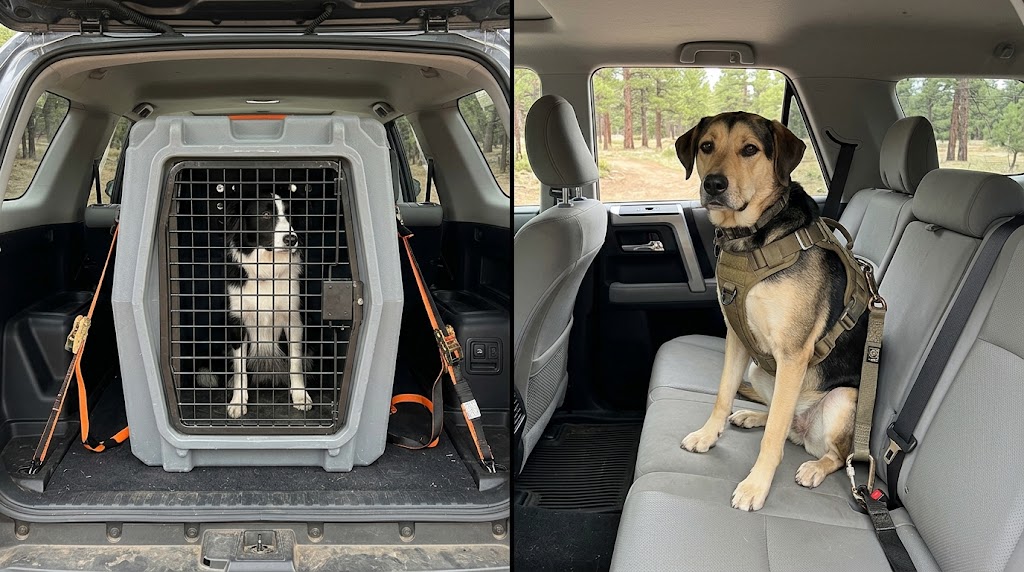
Method 1: crash-tested travel harnesses
A travel harness secures your dog directly to the vehicle's existing passenger restraint system on the rear seat bench.
How to secure it correctly
- Seat placement: Position the dog strictly on the rear passenger bench. Never place a harnessed dog in the front passenger seat; passenger-side airbags deploy with explosive force that will kill a dog upon impact.
- Direct seatbelt threading: For maximum dynamic protection, use harnesses designed with dorsal webbing loops that thread directly through the vehicle's standard three-point seatbelt.
- Locking the retractor: Pull the vehicle seatbelt all the way out to engage the emergency locking retractor (ratchet mode), then feed the slack back into the spool. This locks the belt tight against the seat bench, eliminating dangerous slack distance.
- Avoid long extension tethers: Never clip a harness to a long nylon tether that clicks into the seatbelt buckle. In a crash, a dog accelerates across that slack space before the tether snaps tight, creating a violent dynamic shock load.
The Kurgo Impact Dog Car Harness features a direct seatbelt threading path and steel nesting buckles designed for this purpose.
Method 2: heavy-duty travel crates
A travel crate encases the dog within an impact-resistant safety shell, typically positioned in an SUV, hatchback, or truck cargo compartment.
How to secure it correctly
- Choose structural materials: Standard wire crates, soft fabric folding pens, and thin plastic airline kennels shatter or collapse under dynamic crash forces. Legitimate vehicle crates use double-walled rotomolded plastic or welded heavy-gauge aluminum frames. The MidWest LifeStages Metal Dog Crate provides sturdy construction for everyday transport.
- Tie-down anchor points: A crate that is not secured to the vehicle frame acts like a 50 to 80 lb battering ram in a rollover. Secure the crate using load-rated ratchet straps anchored directly to factory structural cargo D-rings bolted into the vehicle floor.
- Beware of plastic cargo loops: Many vehicles feature decorative plastic tie-down loops meant solely for grocery nets. These snap instantly under crash forces; anchor only to structural metal chassis points.
- Orientation and positioning: Place the crate flush against the rear seatback rather than centered in the cargo bay. This prevents momentum buildup during a forward collision.
Crate vs. harness comparison
- Vehicle footprint: A harness takes up only a single seat on the rear bench, ideal for sedans and compact cars. A crate demands substantial cargo space and requires an SUV, estate, wagon, or truck bed.
- Trail cleanup: With a harness, mud, burrs, and wet trail debris transfer directly onto your car seats. A crate encloses all the mess inside an easily hosed-out container.
- Comfort on long drives: A harnessed dog must remain seated or lying flat. A crate allows the dog to stand, turn, and curl naturally inside an enclosed "den" environment.
- Post-crash containment: If a door or window pops open, a harnessed dog can bolt into traffic. A crate keeps the dog contained even if vehicle doors are crushed or sheared.
- Rear crumple zone risk: A harness positions the dog safely in the vehicle's reinforced passenger safety cell. A crate placed in the very rear of a hatchback or SUV sits directly in the rear crumple zone during a rear-end collision.
- Cost: Certified harnesses run $80 to $180. Rotomolded or aluminum crates run $500 to $1,200+.
Which is best for your trail dog?
Choose a crash-tested harness if: You drive a sedan, hatchback, or small crossover without sufficient height for an upright crate. You want your dog within the vehicle's reinforced passenger safety cell. Your dog travels calmly and settles easily on seats.
Choose a heavy-duty travel crate if: You have a large SUV, wagon, or truck with heavy-duty metal tie-down points. You hike frequently in rain, mud, and river terrain and need a containment area that isolates trail dirt. Your dog is active, anxious, or an escape artist. You want post-collision containment to prevent bolting into traffic.
The research verdict
The single most dangerous travel setup is an unrestrained dog riding loose in the car or secured with a flimsy walking harness attached to a cheap plastic seatbelt clip. For sedans and smaller vehicles, an independently certified dynamic crash harness threaded directly through the vehicle's rear seatbelt offers excellent protection. For owners with large SUVs and sufficient cargo clearance, a strapped-down crash-tested crate provides the ultimate protection.
Trail Bound Paws tip: Whichever method you choose, do a practice run before heading to the trailhead. Install the harness or crate at home, let your dog settle in for 15 to 20 minutes, then take a short drive. Adjusting restraint fit in a parking lot is much easier than at the side of a busy highway.
For detailed crash test results and our top-rated restraint picks, visit our car safety and travel guide.