 Trail Bound Paws
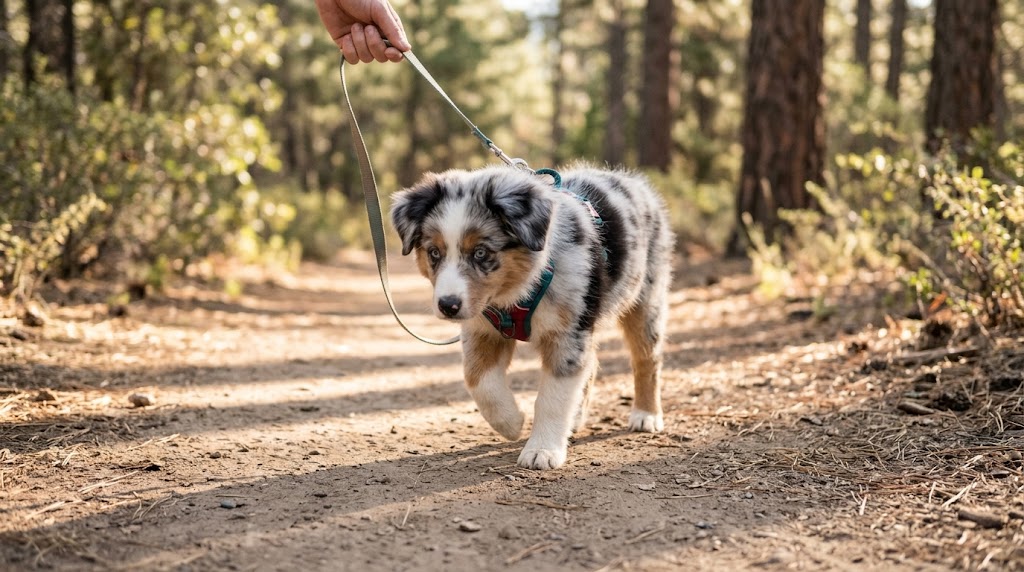
A puppy on a trail is not a smaller version of an adult trail dog. Their bones are still forming, their immune system is still developing, and their brain is in a critical period where new experiences shape lifelong behavior. Getting the timeline right matters more than the distance.
The vaccination timeline comes first
Puppies should not walk on trails frequented by other dogs until their vaccination series is complete, typically between 14 and 16 weeks of age. Parvo, distemper, and leptospirosis live in soil and standing water. An incomplete vaccination series leaves your puppy vulnerable to diseases that are expensive to treat and sometimes fatal.
Before the series is complete, you can carry your puppy on trails in a sling or backpack for exposure to sights, sounds, and smells without ground contact. This counts as socialization even though the puppy is not walking.
Growth plates: the distance limiter
Puppy bones have soft growth plates (epiphyseal plates) at each end that do not fully harden until the dog reaches skeletal maturity. Small breeds close their growth plates around 8 to 12 months. Large and giant breeds may not close until 14 to 18 months.
Repetitive high-impact activity on open growth plates can cause permanent skeletal deformities. This does not mean no exercise. It means structured, moderate exercise on soft surfaces with plenty of rest.
Age-appropriate trail guidelines
| Age | Max distance | Surface | Notes |
|---|---|---|---|
| 8 to 16 weeks | Carried only | N/A | Socialization by exposure, not walking |
| 4 to 6 months | 0.5 to 1 mile | Soft dirt, grass | Short, flat trails. Frequent rest stops. |
| 6 to 9 months | 1 to 2 miles | Soft to moderate | Gentle inclines okay. No boulder scrambles. |
| 9 to 12 months | 2 to 3 miles | Mixed terrain | Gradual increase. Watch for limping next day. |
| 12 to 18 months | 3 to 5 miles | Standard trail | Large breeds still growing. Avoid extreme elevation. |
Gear for trail puppies
Harness over collar
A puppy pulling against a collar can damage the trachea and cervical spine. Use a harness from day one on the trail. The Ruffwear Front Range Harness comes in an XXS size that fits puppies from about 13 inches chest girth. Its padded chest panel distributes pressure across the sternum instead of the throat.
Lightweight leash
A heavy leather leash is overkill for a 15-pound puppy and adds unnecessary weight to their collar or harness attachment point. A lightweight biothane leash is waterproof, easy to clean after muddy puppy adventures, and weighs a fraction of leather or chain options.
Portable water
Puppies dehydrate faster than adults because they have a higher surface-area-to-volume ratio. Carry water and a collapsible bowl, and offer drinks every 10 to 15 minutes during warm-weather walks.
The socialization window: use trails wisely
Between 3 and 14 weeks, puppies are in their critical socialization period. Positive exposure to new environments during this window shapes a confident adult dog. Trails offer exposure to:
- Uneven surfaces and varying textures (gravel, mud, water crossings)
- Wildlife sounds and smells
- Other dogs and people at a distance
- Being handled in unusual positions (lifted over logs, carried through water)
Keep every trail experience positive. If your puppy shows fear (crouching, tail tucked, refusing to move forward), do not drag them past the scary thing. Back up to a comfortable distance, let them observe, and reward calm behavior. Forcing a puppy through fear creates lasting anxiety, not confidence.
Signs you are overdoing it
- Sitting down mid-trail: Not sniffing, just sitting. This is a puppy telling you they are done.
- Limping the morning after: Even mild limping means the previous outing exceeded their structural capacity. Cut distance by half.
- Excessive sleeping beyond normal: Puppies sleep a lot (18 to 20 hours). But if your puppy is sleeping more than usual for 24 hours after a hike, the effort was too much.
Trail Bound Paws tip: Bring a small towel on puppy trail outings. Puppies explore with their mouth and end up muddy, wet, and occasionally smelling like something dead within the first 15 minutes. A quick towel-off before getting back in the car saves your upholstery and your sanity.
For harness sizing guidance for growing puppies, see our trail harnesses and leashes guide.