 Trail Bound Paws
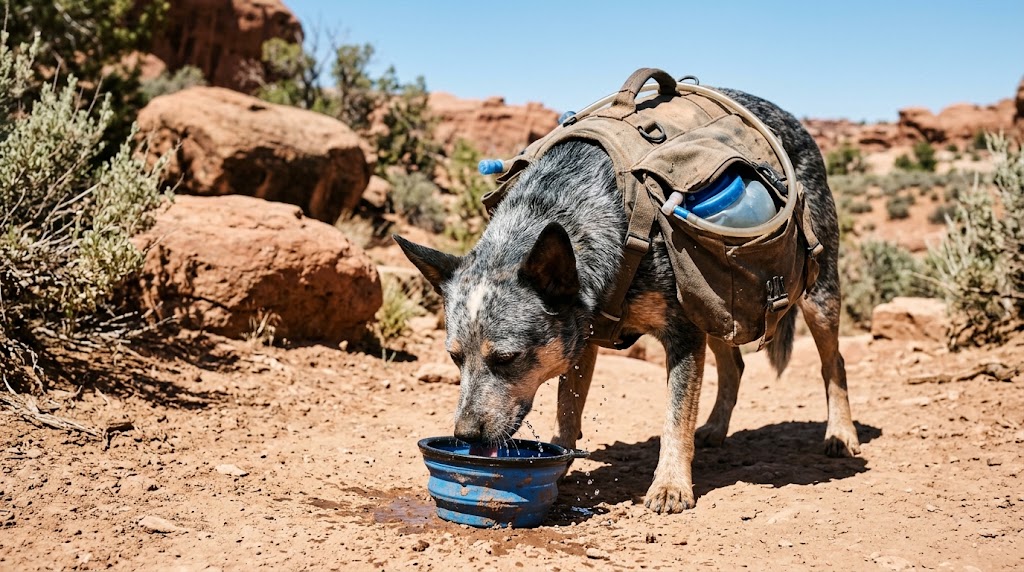
The physics of water weight on the trail
The primary hazard of water carriage comes down to pure density. At standard temperatures, 1.0 liter of water weighs 1.0 kilogram (2.205 lbs). If you place two 1-liter hydration bladders into a dog pack (one on each side), you are adding 4.41 lbs of cargo in liquid alone. Adding the empty chassis weight of a multi-strap technical backpack (typically 1.5 to 2.2 lbs), the total load reaches roughly 6.0 to 6.6 lbs.
For a 50 lb dog whose safe maximum trail capacity sits around 10% to 12% of body weight (5.0 to 6.0 lbs), two liters of water immediately maxes out or exceeds their safe skeletal load limit before packing a single ounce of food, booties, or waste bags.
Safe water volume guidelines by body weight
- 35 lb dog: 3.5 lb total load target. Max liquid: approximately 26 fl oz (770 ml) total, split evenly between panniers.
- 50 lb dog: 5.0 lb total load target. Max liquid: approximately 38 fl oz (1.1 L) total.
- 70 lb dog: 7.0 lb total load target. Max liquid: approximately 53 fl oz (1.5 L) total.
- 85+ lb dog: 8.5 lb total load target. Max liquid: approximately 64 fl oz (1.9 L) total.
A well-designed pack like the Ruffwear Approach Pack minimizes its own chassis weight, leaving more of your dog's weight budget available for actual cargo.
Slosh kinetics and dynamic mass shifts
Backpack marketing descriptions frequently tout "includes two hydration bladders" as a premium feature. What manufacturers rarely mention is the difference between static ballast and dynamic liquid momentum.
When a container is partially full, the liquid inside sloshes back and forth with every footfall. This creates momentum lag: when your dog plants its foreleg to brake or pivot, the liquid continues moving forward, pushing dynamic momentum into the front shoulders. On a narrow ridgeline or balancing on rocks, a sudden lateral slosh can pull the pack chassis sideways.
Containment methods compared
- Rigid plastic water bottles: High slosh. As water is consumed, air space increases and liquid slams against rigid walls during active trotting. Low lateral stability. Best for short, flat day walks where bottles can be refilled frequently.
- Baffled soft bladders: Moderate slosh. Internal welded baffles restrict lateral liquid surge; flexible walls can be compressed to purge trapped air. High lateral stability. Best for multi-mile trail hikes.
- Hydration gel or frozen compresses: Zero slosh. Semi-solid state prevents fluid sloshing entirely while providing cooling along the thoracic wall. Maximum stability. Best for warm-weather morning climbs.
The asymmetric consumption trap
The most common mistake handlers make with dog water packs is unbalanced consumption. If a dog stops for a drink and the handler pours 16 oz of water from the left pannier into a collapsible bowl while leaving the right pannier untouched, the pack instantly develops a 1-pound lateral imbalance. Within five minutes of movement, that discrepancy causes the pack chassis to slide down the heavier side.
To prevent this, the Wellver Dog Backpack and similar dual-pannier designs make it easy to draw equal amounts from both sides. Follow this protocol:
- Pre-trail loading: Measure equal fluid volumes into both bladders using volume marks.
- Trapped air purging: Invert soft bladders and squeeze all excess air out before sealing.
- Trailside dispensing: Always draw equal amounts from both bladders during every break.
- Asymmetric contingency: If one bottle must be emptied, transfer counterweight (gear or small rocks) to the light side to maintain balance.
Three scenarios where handlers should carry the water
Never delegate water carriage to your dog under these conditions:
- High heat or direct sun exposure: Backpack panniers trap heat against the dog's torso, blocking convective airflow. In hot weather, carrying water forces the dog to expend extra metabolic energy, significantly increasing its own water requirement and accelerating heat exhaustion risk.
- Technical rock scrambles and boulder fields: Jumping down ledges multiplies compressive impact forces on the front carpal joints. Liquid sloshing during an awkward landing can cause paw misplacement or acute joint sprains.
- Immature or senior dogs: Dogs whose growth plates have not fully closed (under 18 to 24 months) or senior dogs with joint degeneration should never carry dynamic fluid weights.
The research verdict
Yes, healthy adult dogs can safely carry their own water, but only under strict operational controls. Limit water cargo so that total pack weight stays well within 10% to 12% of the dog's body weight. Use baffled, compressible soft bladders rather than rigid bottles to prevent sloshing, purge all air before setting out, and always dispense equal amounts from both sides at every hydration stop.
Trail Bound Paws tip: Fill soft bladders to about 80% capacity and squeeze all air out before sealing. This creates a dense, slosh-resistant package that conforms to your dog's ribcage. As the water level drops during the hike, squeeze the bladder again at each stop to purge the newly created air space.
To compare packs featuring integrated hydration routing and stable compression chassis, explore our dog backpacks guide. For information about water safety gear, see our dedicated guide.