 Trail Bound Paws
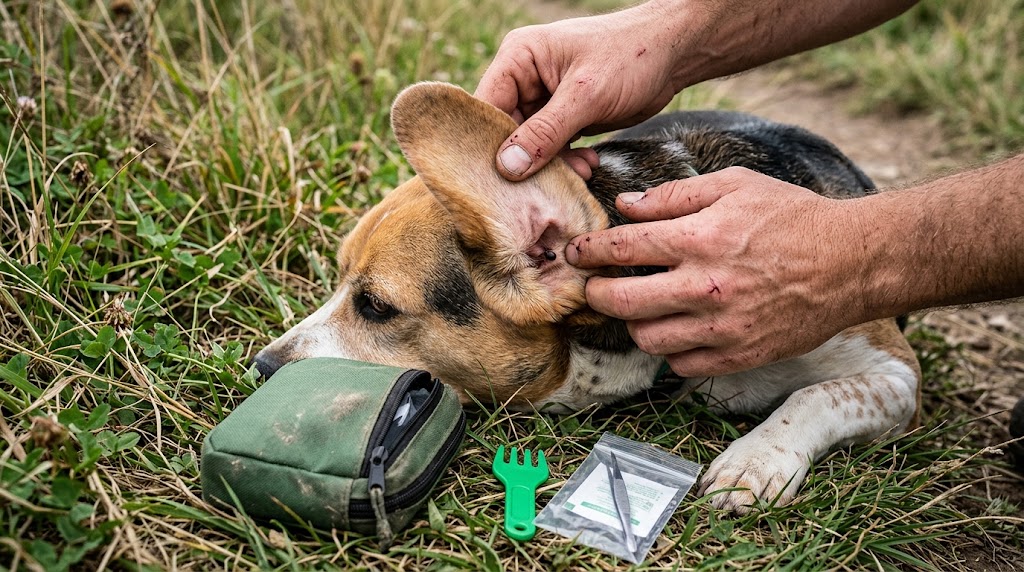
Ticks do not jump, fly, or fall from trees. They wait on the tips of grass blades and shrub branches with their front legs outstretched. When your dog brushes past, they grab on, crawl to a warm spot, and dig in. Every hike through grass, leaf litter, or brush puts your dog in contact with them.
Know what you are dealing with
There are roughly 90 tick species in the United States, but four cause the vast majority of disease in dogs:
- Deer tick (blacklegged tick): Transmits Lyme disease, anaplasmosis, and babesiosis. Found primarily in the Northeast, upper Midwest, and Pacific Coast.
- American dog tick: Transmits Rocky Mountain spotted fever. Found nationwide but concentrated east of the Rockies.
- Lone star tick: Transmits ehrlichiosis and STARI. Found in the Southeast and expanding northward.
- Brown dog tick: The only tick that completes its entire life cycle indoors. Transmits ehrlichiosis and babesiosis.
Fleas are a year-round problem in temperate climates and a seasonal problem everywhere else. Trail dogs pick them up from wildlife resting areas, especially deer beds and rabbit warrens.
Prevention: a three-layer approach
Layer 1: Veterinary preventative
This is the non-negotiable foundation. Oral preventatives (like NexGard or Simparica) kill ticks after they bite but before they can transmit most diseases (transmission typically requires 24 to 48 hours of attachment). Topical preventatives (like Frontline Plus) repel and kill on contact. Talk to your vet about which product fits your dog's health profile. Some herding breeds have genetic sensitivities to certain active ingredients.
Layer 2: Physical barriers
A light-colored shirt or vest on your dog makes ticks easier to spot during trail breaks. Yes, dogs can wear shirts on the trail. The KOOLTAIL Dog Cooling Shirt serves double duty in warm weather: it covers the torso where ticks commonly attach while also providing evaporative cooling. For dense brush and tall grass, dog-specific tick-repellent bandanas treated with permethrin offer an additional barrier around the neck and chest area.
Layer 3: Post-hike tick check
Prevention reduces risk but does not eliminate it. Run your hands over every inch of your dog's body within two hours of leaving the trail. Focus on:
- Inside and behind the ears
- Around the eyes and eyelids
- Under the collar
- Between the toes
- The groin and armpits
- Under the tail
These are warm, thin-skinned areas where ticks prefer to attach. A tick removal tool with a fine hook gets under the mouthparts cleanly. Tweezers work, but the hook design reduces the chance of leaving the head embedded.
What to do when you find a tick
- Do not squeeze the body. This can inject more saliva and pathogens into the wound.
- Slide the tick removal tool under the tick where its mouthparts meet the skin.
- Pull straight upward with steady, even pressure. Do not twist.
- Drop the tick into rubbing alcohol to kill it, or seal it in tape. Some vets recommend keeping the tick in a sealed bag for 30 days in case your dog develops symptoms and the tick needs to be identified.
- Clean the bite site with antiseptic.
- Monitor the area for redness, swelling, or warmth over the next two weeks.
Flea management on the trail
Fleas jump onto your dog from ground-level areas where infested wildlife has rested. Unlike ticks, fleas multiply fast. A single female flea lays up to 50 eggs per day, and those eggs fall off your dog into your car, your home, and your camping gear.
Your veterinary preventative covers fleas too (most oral and topical products handle both). The critical step is not letting an infestation establish in your vehicle or home. After hikes through known flea areas, use a fine-toothed flea comb over your dog's belly and base of the tail before loading them into the car.
Trail Bound Paws tip: Keep a dedicated tick check kit in your car: tick removal tool, small magnifying glass, rubbing alcohol, cotton swabs, and a ziplock bag. Doing the tick check in the parking lot before driving home means any ticks you find stay at the trailhead, not in your house.
For full-body protective gear that also serves as a tick barrier, see our outdoor clothing and coats guide.