 Trail Bound Paws
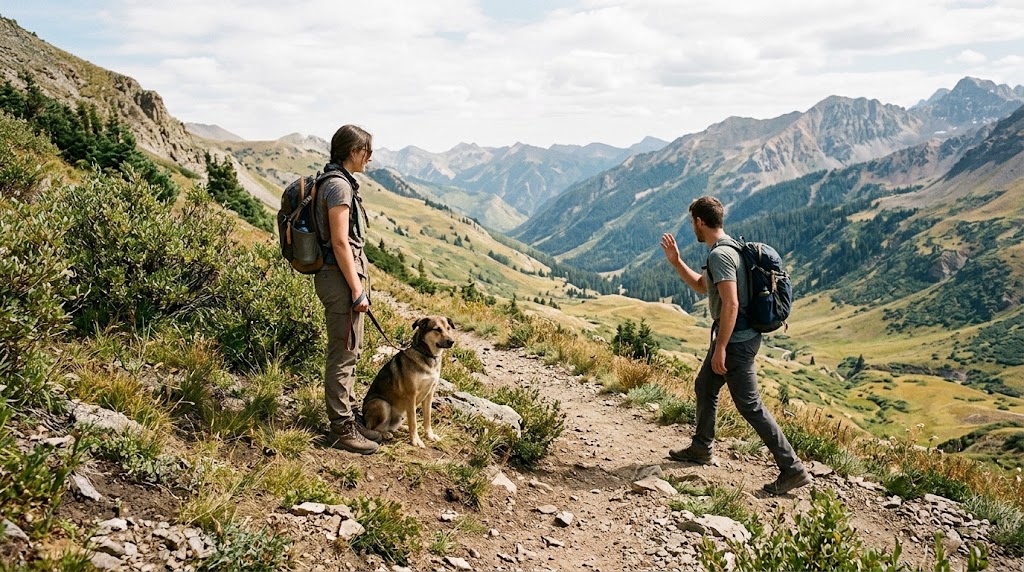
Trail etiquette exists because trails are shared. Hikers, runners, mountain bikers, equestrians, and their dogs all use the same narrow paths. The rules are not complicated, but they matter more when you have a dog because your dog does not know them.
The universal yield order
This hierarchy exists on almost every multi-use trail in North America:
- Horses have right of way over everyone. Horses are prey animals. A dog running at a horse can cause a spook that injures the rider, the horse, and the dog. When you see a horse, step well off the trail (downhill side if possible), shorten your leash to zero slack, and wait quietly until the horse passes. Speak to the rider in a normal voice so the horse hears a human, not a silent shape.
- Hikers yield to horses but have right of way over bikers.
- Mountain bikers yield to everyone else.
Uphill hikers have right of way over downhill hikers. The uphill hiker has a narrower field of vision and is working harder. Stepping aside when descending costs you almost nothing.
Leash etiquette
Even if local regulations allow off-leash hiking, not every dog or person on the trail wants to meet your dog. The rules:
- Leash up when you see other people or dogs. Period. "My dog is friendly" is not a substitute for physical control. The other dog might not be. The other person might be terrified of dogs. A child might freeze and scream, which triggers chase instinct in even well-trained dogs.
- Ask before allowing a greeting. "Can my dog say hi?" gives the other person the chance to say no. Respect that answer without commentary.
- Keep your leash short on narrow trails. A 6-foot leash stretched across a trail is a tripwire for runners and bikers. When the trail narrows, shorten up and move to one side.
A traffic handle leash gives you a short-hold grab point near the dog's harness for passing situations while the rest of the leash stays at normal length for open sections.
Waste: the non-negotiable
Pick up your dog's waste. Every time. On every trail. No exceptions.
"It is biodegradable" is technically true and practically wrong. Dog waste introduces parasites and bacteria that wild animals do not carry. It takes up to a year to decompose on a dry trail. It concentrates near popular trailheads where hundreds of dogs pass daily. And it makes land managers restrict dog access for everyone.
Carry bags. Use them. Pack the full bag out with you. If your dog goes off-trail in brush and you cannot find it, try harder. Tie a waste bag dispenser to your leash or harness so you never have the excuse of forgetting bags.
Trail damage and erosion
Dogs that run off-trail through switchbacks cause erosion. Each shortcut through a switchback removes vegetation that holds soil in place. After a few dozen dogs take the same shortcut, you have a water channel that washes the trail away in the next rain.
Keep your dog on the trail. If they need to go to the bathroom, step a few feet off the trail, do the business, bag it, and get back on the path. Do not let your dog dig (some love to dig in soft trail shoulders).
Noise
Persistent barking on the trail disturbs wildlife and other hikers. If your dog barks at every squirrel, bird, and passing hiker, they need more desensitization training before they are trail-ready. Some barking at genuinely startling events is normal. Sustained barking at everything that moves is a training gap, not a personality trait.
Shared campsites
At backcountry campsites, keep your dog close and quiet during evening hours. Other campers came for solitude, not to listen to your dog whining at a raccoon from 9 PM to midnight. Use a tie-out line attached to a tree, keep the line short enough that your dog cannot reach neighboring campsites, and bring something for your dog to chew on quietly.
Trail Bound Paws tip: The simplest way to be a good trail citizen with your dog: pretend every other person on the trail is afraid of dogs, allergic to dogs, or hiking with a reactive dog they are working hard to rehabilitate. If your default behavior would still be considerate under all three assumptions, you are doing it right.
For hands-free leash options that make trail passing easier, see our trail harnesses and leashes guide.