 Trail Bound Paws
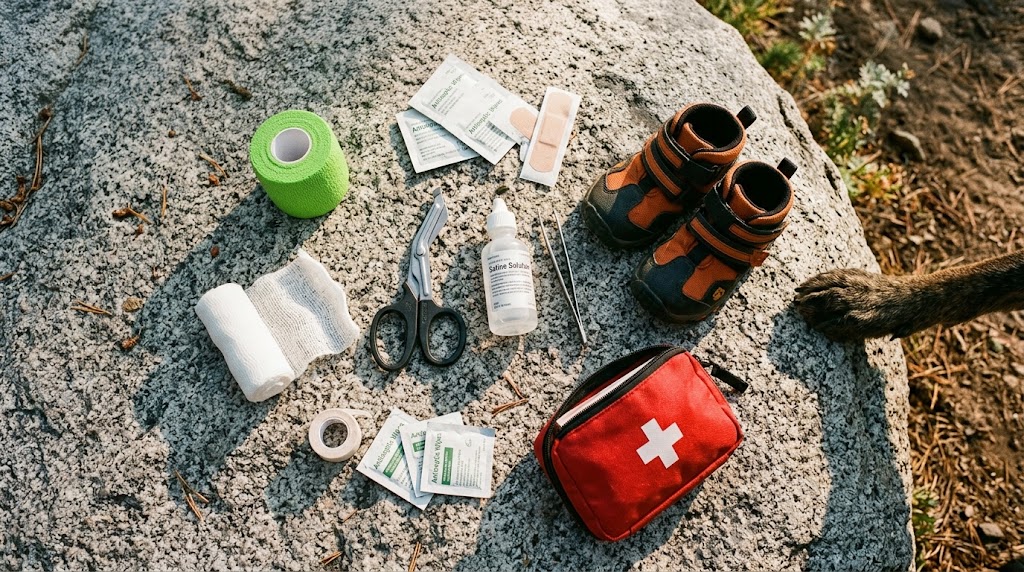
A torn paw pad four miles from the trailhead is not the time to improvise. Knowing what to pack and how to use it turns a potential emergency into a manageable situation.
Why a human first aid kit falls short
Your standard backcountry med kit covers you, not your dog. Dogs have different wound care needs. Their skin moves differently over underlying tissue, they cannot tell you where it hurts, and they will lick anything you apply unless you physically prevent it. A few dog-specific additions to your pack solve most of this.
The core trail kit for dogs
Keep these items in a small dry bag inside your pack. Total weight: under 200 grams.
Wound care basics
- Self-adhering cohesive bandage (vet wrap): Sticks to itself, not to fur. Use it to hold gauze pads in place over cuts, wrap a sprained wrist joint, or secure a boot over a damaged paw. Carry two rolls.
- Non-stick gauze pads (3x3 inch): Place directly over open wounds before wrapping. Non-stick matters here because regular gauze bonds to exposed tissue and tears the wound open when removed.
- Blunt-tip scissors: For cutting bandage material and trimming fur away from wound edges so you can see what you are working with.
- Saline wound wash: A small squeeze bottle of sterile saline cleans debris from cuts without stinging. Tap water works in a pinch, but saline is gentler on exposed tissue.
Paw-specific items
- Spare dog boots: A single Ruffwear Grip Trex boot in your dog's size acts as an instant protective shell over any paw injury. Faster and more secure than trying to build a field bandage from gauze alone.
- Paw wax: Musher's Secret applied to cracked or dry pads mid-hike restores the moisture barrier and reduces further splitting.
A ready-made option
If assembling individual supplies sounds like too much hassle, the Adventure Medical Kits Me & My Dog kit comes with supplies for both you and your dog in waterproof DryFlex bags. It includes vet wrap, gauze, antiseptic towelettes, and a quick-reference injury card. It weighs about 340 grams and fits in a cargo pocket.
The five trail injuries you will actually encounter
Dramatic rescue scenarios get the attention online, but these are the injuries that actually happen on trails, ranked by how often experienced handlers report them.
1. Pad abrasions and tears
The most common trail injury by far. Rough granite, sharp shale, and hot asphalt all wear through pad tissue. You will notice your dog licking a paw obsessively, limping, or leaving small blood marks on rocks.
Field response: Rinse the wound with saline. If the pad flap is still attached, press it back into place as a biological bandage. Cover with a non-stick pad, wrap with vet wrap, and slide a boot over the whole thing. Head back to the trailhead.
2. Thorn and foxtail punctures
Foxtail grass awns and cactus spines penetrate between toes and burrow deeper with each step. Check between your dog's toes during every rest break in grassland or desert terrain.
Field response: If you can see the object and grip it, pull it straight out with tweezers. Flush the hole with saline. If the object has broken off below the skin surface, bandage the area, boot the paw, and get to a vet. Digging for embedded foxtails in the field risks pushing them deeper.
3. Limb sprains
Dogs that leap off boulders or take sharp turns on loose scree can hyperextend the carpus (front wrist) or strain the stifle (rear knee). You will see sudden weight shifting or a refusal to bear weight on the affected leg.
Field response: Rest. Do not try to splint a dog's leg in the field unless you have specific veterinary training. Carry the dog if small enough, or walk slowly back with frequent stops. Cold water from a stream applied via a soaked bandana for 10 minutes can reduce swelling.
4. Heat exhaustion
Flat-faced breeds (bulldogs, pugs, boxers) and heavy-coated dogs overheat faster than you expect. Signs include excessive panting that does not slow with rest, bright red gums, drooling, and wobbling.
Field response: Get into shade immediately. Pour water over the dog's belly, groin, and paw pads. Offer small sips of water but do not force drinking. Fan the dog if possible. If gums turn grey or the dog loses coordination, this is an emergency. Carry the dog out and drive straight to a vet.
5. Snake encounters
Snakebites on the trail are rarer than most people fear, but they happen. The nose and front legs are the most common bite sites because dogs investigate with their face first.
Field response: Keep the dog calm and still. Do not cut the wound, suck venom, or apply a tourniquet. These actions cause additional tissue damage and do not extract venom. Carry the dog to the vehicle and drive to the nearest emergency vet. If you can safely photograph the snake from a distance, do so. That helps the vet choose the right antivenin.
Trail Bound Paws tip: Practice wrapping your dog's paw with vet wrap at home before you need to do it on the trail. A calm, familiar dog who has experienced the sensation of a wrapped paw will cooperate much better during a real injury than one feeling it for the first time while in pain.
Kit maintenance
Check your trail kit at the start of each hiking season. Replace saline that has been opened. Confirm vet wrap has not dried out or lost its stretch. Restock any supplies you used on previous trips. Tape your vet's emergency phone number and the nearest 24-hour animal hospital address to the inside of the kit bag.
For gear that helps prevent paw injuries before they happen, see our paw protection and dog boots guide.