 Trail Bound Paws
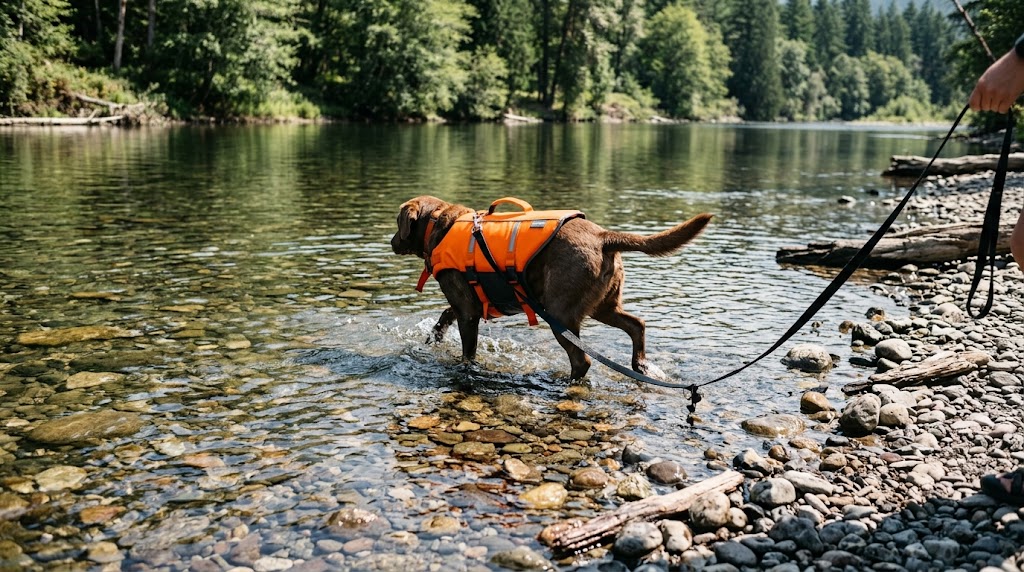
Most dogs love water. Most dogs are also terrible at judging water that can kill them. Rivers with invisible undercurrents, lakes with toxic algae blooms, and ocean surf with riptides all look the same to a dog as the backyard kiddie pool. Your job is to know the difference.
Rivers and streams: the current problem
Moving water is the leading cause of drowning in dogs. A dog that wades confidently into a shallow stream edge can step off a submerged ledge into a channel with a current stronger than they can swim against. River bottoms are not uniform: what is ankle-deep at the bank can be chest-deep three feet out with a powerful downstream pull.
Reading water before your dog enters
- Look for surface disturbance: Smooth, glassy water moving fast is more dangerous than choppy water moving slowly. The smooth surface means the water is deep enough for laminar flow, which carries more force.
- Check downstream: What happens if your dog gets swept? Is there a shallow gravel bar they will wash onto, or a waterfall, log jam, or rapids? Never let a dog enter water when the downstream consequence of losing footing is severe.
- Test with a stick: Toss a stick into the current where your dog would enter. If it moves faster than a walking pace, the current is too strong for most dogs.
Safe river access
Look for wide, shallow sections with gravel bottoms where you can see the bottom clearly. Eddies (calm pools behind large boulders) are natural safe zones. Let your dog wade and drink in these areas while you maintain a leash connection.
Lakes and ponds: hidden dangers
Blue-green algae
Cyanobacteria blooms (blue-green algae) produce toxins that can kill a dog within hours of ingestion. The water looks like someone poured green paint into it, or there is a scummy film on the surface. If you see a bloom, keep your dog completely out of the water. Do not let them drink from it. Do not let them wade through it. The toxins absorb through skin and are lethal in small amounts.
State and county health departments post algae advisories for public lakes. Check before you go.
Leptospirosis
Standing water contaminated by wildlife urine (especially from raccoons, deer, and livestock) can carry leptospirosis bacteria. Dogs contract lepto by drinking contaminated water or wading through it with open wounds on their paws. Vaccination reduces risk significantly. If your dog hikes near water regularly, discuss the lepto vaccine with your vet.
Ocean and surf
Saltwater ingestion causes vomiting, diarrhea, and in large amounts, sodium toxicity. Dogs that fetch toys in surf swallow water with every retrieval. Limit ocean fetch sessions to 10 to 15 minutes and offer fresh water immediately afterward.
Riptides pull even strong swimmers offshore. Stick to beaches with gentle surf and avoid areas with posted rip current warnings.
Dog life jackets: when to use them
Not all dogs swim well. Barrel-chested breeds (bulldogs, dachshunds, corgis) are front-heavy and tire quickly in water. Deep-chested breeds (Greyhounds, Whippets) have low body fat and limited buoyancy. Puppies and senior dogs lack the stamina for sustained swimming.
A Outward Hound Granby Splash dog life jacket provides buoyancy and a grab handle on the back for lifting a dog out of the water. The bright orange color makes your dog visible in murky water or chop. Use it any time your dog is near water deeper than their standing height, regardless of swimming ability.
For strong swimmers in calm water, a life jacket is optional. For any dog near moving water, deep water, or open ocean, it is essential.
After the swim
- Rinse your dog: Lake bacteria, river silt, saltwater, and algae residue all irritate skin. A quick rinse with clean water from your bottle prevents hot spots and ear infections.
- Dry the ears: Water trapped in the ear canal breeds bacteria. Use a dry cloth or cotton ball to absorb moisture from the outer ear after any swim.
- Watch for secondary drowning: A dog that inhaled water during a rough swim may seem fine initially but develop coughing, lethargy, or difficulty breathing hours later. This is pulmonary edema from aspirated water and requires emergency vet care.
Trail Bound Paws tip: Introduce your dog to water gradually. Start with calm, shallow water where they can stand and walk. Never throw a dog into water or push them off a dock. Dogs that have a bad first water experience often refuse to enter water for the rest of their lives.
For more on water gear and portable hydration, see our water safety and hydration guide.